

ABOUT ILA BERLIN
ILA Berlin is one of the world's leading aerospace trade shows. Every two years it brings the global aerospace community to the heart of Europe.
ILA Berlin: Pioneering Aerospace since 1909
With its Aviation, Space and Defence segments, ILA Berlin covers the entire value chain of the aerospace industry. Together with our additional focus areas Supplier, UAS, Start-Ups and Talent Hub, ILA offers a holistic view of the aerospace sector and beyond.
In 2026, the European Commission is once again strategic partner of ILA Berlin. This partnership strengthens Europe's technological leadership and paves the way for a sustainable future of aerospace under the motto "Airborne in Europe".
The Story of ILA
From the first balloon ascents in 1909 to the global aerospace platform at BER.
The Story of ILA as a Chronicle
Over a century of aerospace history as an interactive timeline – year by year.
Pioneering Era

The world's first stand-alone aviation trade show
The story of ILA begins with the first International Aeronautical Exposition from July 10 to October 17, 1909 in Frankfurt am Main. It was not only the world's first stand-alone aviation trade show, but also the first international platform for aeronautical communication in the still young field of aviation. After only one year of preparation, an in-depth overview of the state of airship construction and aviation technology in Germany was presented to a fascinated public and industry audience in the summer of 1909: over a period of 100 days, 500 exhibitors presented airships, aircraft and balloons that captivated 1.5 million visitors. The star of the exhibition was an aircraft built by the Wright Brothers, brought to Frankfurt for a week from flight displays in Berlin.
Cradle of aviation in Berlin/Brandenburg
Following the first ILA, numerous aviation clubs joined forces in April 1910 at the suggestion of August Euler to form the German Aviators' Federation. One year later, the Association of German Aircraft Manufacturers was founded in Frankfurt am Main. This also established the direct link between ILA and what would later become the German Aerospace Industries Association (BDLI), a connection that still exists today. Ever since Lilienthal's first flight experiments, the history of Berlin-Brandenburg has been closely tied to developments in national and international aviation. Against this backdrop, the second edition of ILA was held at the "cradle of human flight" – in Berlin.

Bestseller "Yellow Dog"
In 1912, the General Aviation Exhibition (ALA) in Berlin showcased German aeronautical technology. For the first time, aircraft outnumbered airships: 25 flying machines and seven airships were on display. All leading aircraft manufacturers of the era were represented in Berlin. A highlight: August Euler's biplane "Yellow Dog", which shortly after its presentation received a sign reading: "Sold eight times in a single day."


"Oktoberfest" under the Radio Tower
In 1928, the first International Aviation Exhibition after the end of World War I took place. The venue was once again Berlin. At the time, the public was still enthusiastically celebrating the first east-west crossing of the Atlantic Ocean with a Junkers W 33 "Bremen" and its crew Köhl, von Hünefeld and Fitzmaurice. This event also drew American public attention to the achievements of German aviation technology. The organiser was the Reich Association of the German Aviation Industry in cooperation with the Exhibition, Trade Fair and Tourism Office of the City of Berlin. In three exhibition halls, the aviation industry from 19 countries presented itself. All major German aircraft manufacturers showcased their latest developments, from the light sport and training aircraft BFW M 21 to the four-engine Dornier Super Wal. A special attraction of ILA 1928 was a star flight of 40 aircraft heading for Berlin-Tempelhof.

The sporting side of flying
The next aviation event in 1932 was dedicated entirely to the sporting side of flying. Highlights of this exhibition included the study of a "flying car" designed by Ludwig and Mertens, as well as the "weekend aircraft of the future" – a flying boat with a spacious cabin. 100 aircraft from across Germany took off for the "great Dela flight day with aircraft racing" at Berlin-Tempelhof Airport. For a long time, Dela would remain the last major aviation exhibition in Germany. During the era of National Socialist rule, no ILA was held. It took a quarter of a century before aviation industry products and technologies were exhibited again.
Zero Hour

Ban on aircraft production
In 1945, the Allied Control Council imposed a ban on the development and production of aircraft in Germany. It took ten years for Germany to regain its air sovereignty.

The comeback of aviation
Lufthansa flies again. The Bundeswehr is founded. Germany regains its air sovereignty.
Hanover

New start at Hanover-Langenhagen
When Germany regained its air sovereignty in 1955 after the Second World War, the foundation was laid for an "International Touring Aircraft Show", held as part of the industrial fair at Langenhagen Airport in 1957. It became the forerunner of a more than thirty-year ILA tradition in Hanover. Although only 17 exhibitors were represented at the industrial fair, the show was a success: 24 aircraft were on display; around 20,000 visitors were counted over the four exhibition days, and business was good. The decision to hold an annual aviation exhibition was made – paving the way for the post-war ILA.


The "Special Show"
In the late 1950s, the resurgent German aviation industry wanted a forum that went beyond pure touring aviation. With this aim, the BDLI – founded in 1955 as the successor to the Reich Association of the German Aviation Industry – launched the "Special Show of Aircraft Equipment, Aviation Equipment and Accessories" in 1958, parallel to the German Industrial Fair. 54 companies came to Hanover-Langenhagen Airport. The Germans presented 13 sport and touring aircraft developed after the war, two gliders and the Fouga Magister – the first jet trainer for the Luftwaffe built under German licence. Foreign exhibitors brought 15 sport and touring aircraft to Hanover. The company Autoflug made a splash with the demonstration of an ejection seat.

"German Aviation Show"
The 1959 exhibition was opened by Federal Minister of Economics Ludwig Erhard. From then on, it was called the "German Aviation Show". Visitors paid an entry fee of two Deutschmarks and could admire 16 German sport and touring aircraft – for example the Dornier Do 27 and the RW 3 by Rhein-Flugzeugbau – as well as 15 foreign aircraft such as the Italian Falco F8L and the American Helio H 391B "Courier". However, several major companies were still missing as exhibitors at the first "German Aviation Show".


The breakthrough
The breakthrough came in 1960: "The success of the German Aviation Show in Hanover has exceeded all expectations," reported the German Press Agency. Touring and sport aircraft manufacturers, military aviation, helicopter producers, engine builders, suppliers: 170 companies from eight countries – and more than 100,000 visitors – came to Hanover. Federal Defence Minister Franz-Josef Strauß opened the show. Over 50 touring and sport aircraft were sold at the event. The Lockheed F-104 "Starfighter" jet fighter climbed tirelessly into the sky, and almost daily a Lufthansa Boeing 707 circled over the runway. After the exhibition, the BDLI decided to hold the show every two years, alternating with the Paris Air Show "Le Bourget".


Rapid growth
In 1962, the success of the "German Aviation Show" was consolidated. The organisers were pleased to welcome 237 exhibitors from nine countries; around 175,000 visitors were counted. While sport and touring aviation set the tone in the outdoor area, the focus inside the halls was on military aviation. The emerging field of space also took a prominent place – models were shown for the third stage of the Black Prince satellite launcher, whose development work would later flow into the Ariane rocket.


Innovation and expansion
In 1964, the "German Aviation Show" continued to grow: 280 exhibitors from 15 nations presented their products – and more than 100 aircraft. With the construction of a third hall, an additional third of covered exhibition space became available. The "German vertical take-off aircraft" VJ 101 celebrated its premiere; the experimental aircraft from Entwicklungsring Süd attracted great international attention. The HFB 320 Hansajet from Hamburger Flugzeugbau GmbH, the first German serially produced jet-powered commercial aircraft, could also be extensively admired. Space enthusiasts encountered a 1:2 scale model of the future European launcher Ariane, then still called Europa 1.


Europe grows together
Joint stands of the French aviation industry association and the British Ministry of Aviation hinted in 1966 that the European aviation sector would cooperate more closely in the future. 94 of the "most modern and interesting aircraft in the world", as one newspaper report put it, were gathered in Hanover in 1966: for example the "Skyservant" by Dornier, a multi-purpose aircraft for transport and special missions, or the new military transporter C-160 Transall. As a special attraction, the organisers announced daily formation flights by the French, Italian and British air forces.

Spectacular premieres
The undisputed star of the 1968 show was Dornier's experimental aircraft Do 31 E. The world's only transport aircraft capable of vertical take-off and landing thanks to its swivelling engines was flown in Hanover before an astonished audience. Equally spectacular was the demonstration of the VFW-Fokker VAK 191 B, a reconnaissance and combat aircraft also capable of vertical take-off.


East meets West
For the first time since the Second World War, the Soviet Union came to Hanover in 1970 with two aircraft: the Russians showed the Kamov KA-26, a light multi-purpose helicopter with two counter-rotating three-blade rotors, as well as the Yakovlev Yak-40, a three-engine short-haul passenger jet. A total of nearly 460 exhibitors from 14 countries travelled to Hanover. The English VTOL aircraft Hawker Siddeley "Harrier Mark 1" thrilled the flight display audience. Another premiere in 1970: unmanned aircraft for civil and military special missions were presented for the first time.


Supersonic and loops
The attraction of 1972 was the supersonic passenger aircraft of Russian designer Tupolev. His Tu-144 remained in Hanover for the entire exhibition – the British-French Concorde, by contrast, only gave a one-day guest appearance. In the flight display programme, the MBB Bo 105, the first multi-purpose helicopter serially produced in the Federal Republic, thrilled the crowd: a test pilot flew three consecutive loops – something previously only possible with propeller and small jet aircraft.


A300, VFW 614 and Alpha Jet celebrate their premieres
The 1974 German Aviation Show featured numerous premieres: for example, the European wide-body aircraft Airbus A300, built with significant German involvement. The Alpha Jet trainer, developed in German-French cooperation by Dornier and Dassault-Breguet, also introduced itself for the first time. Another highly noticed debutant demonstrated how powerful the German aviation industry had become: the VFW-Fokker VFW 614 short-haul jet airliner. During demonstration flights, test pilot Leif Nielsen showed the capabilities of this compact jet. After a rapid steep take-off, the Airbus A300 and a Fokker F 28 suddenly appeared on either side of the aircraft at around 400 metres altitude. German space expertise was demonstrated by two full-size mock-ups of the Spacelab space laboratory, designed for use on the US Space Shuttle.

The Tornado introduces itself
The main attraction of ILA 1976 was the Panavia Tornado — two aircraft of the new multi-role combat aircraft thrilled with brilliant flying displays. Vintage highlight: the restored Dornier Do 335A-02 with its distinctive tail propeller, brought back from the USA. Lufthansa brought its latest Airbus A300 to Hanover.

The old and new ILA
In 1978, the aviation show reclaimed its traditional name: ILA. Separating the International Aviation and Space Exhibition from the Hanover Messe gave it greater independence. German Federal President Walter Scheel personally inspected the latest developments in Hanover. Nearly 60 sport pilots gathered at Braunschweig Airport, from where they took off for the final leg of an ILA star flight. Almost 51,000 people attended the major ILA Flight Day on May 4. Overall, organisers counted 230,000 visitors and 352 exhibitors from 13 countries: the old and new ILA was a resounding success.


AWACS premiere
Highlight: the Boeing 707 with the American command and control system AWACS. Flying displays thrilled young and old. A training cockpit was also on show. Aviation, clearly, is not just a men's affair.

World premiere of the A310
In 1982, Chancellor Helmut Schmidt became the first German head of government to open ILA. Among other things, he witnessed the world premiere of the shortened Airbus wide-body aircraft A310. The Diamond I business jet from Mitsubishi Aircraft International and the Commuter T-1040 from Piper also made their debut. Particularly impressive was the display by the Patrouille de France aerobatic squadron, which used eight Alpha Jet fighters to paint the French tricolour across the skies over Hanover.
Debut of the Speed-Canard
Once again, the crowd pullers at ILA 1984 were the flying displays. Aerobatic flights and formation skydiving fascinated the audience just as much as the skills of five different aerobatic squadrons. One of the biggest technical attractions drew on age-old ideas: the engineering company Gyroflug presented the two-seater "Speed-Canard", a so-called canard aircraft whose appearance at first glance seems to contradict conventional ideas of what an aircraft should look like.


"Aunt Ju" in the spotlight
In 1986, ILA was marked by a German-Chinese project: MBB signed a contract with the People's Republic of China in Hanover for the joint construction of a regional airliner. The 75-seater MPC-75 was to be equipped with propfan engines, computer control and plastic wings. However, it was never built. The first four-nation presentation of the "Jäger 90" also drew great attention: the new fighter aircraft was on display as a full-size model. The real star of the show, however, had already seen 50 years of service: the legendary Junkers Ju 52 circled over Hanover with its characteristic hum. Only a few days earlier, "Aunt Ju" had embarked on a new chapter of her life after more than a year of restoration.


Fly-by-wire revolution
At ILA 1988, the German premiere of the "small" Airbus A320 for short and medium-haul routes was celebrated extensively. The revolutionary electronics with fly-by-wire controls were showcased. There was also plenty of news in the sport and touring aircraft sector: Beechcraft unveiled the prototype of its new aircraft generation with the Starship, and Ruschmeyer presented its freshly finished all-composite four-seater MF-85 to the public. The stand of the European Space Agency ESA became a visitor magnet: a full-size model of the European space glider Hermes took pride of place.


After the Wende – farewell to Hanover
In the post-Wende year of 1990, Russian companies showed many innovations in Hanover: Tupolev presented its experimental platform Tu-155 with an engine that could be fuelled either with hydrogen or methane. Antonov impressed with its huge transporter An-124 "Ruslan", Ilyushin with an Il-76 equipped with a propfan. Domestic companies also made their mark: Grob presented the reconnaissance aircraft G 520 Egrett. It was the last ILA in Hanover. The BDLI decided to relocate ILA to the old and new German capital, Berlin, and reconceive it as a leading international trade show and conference event for the entire aerospace industry.
Berlin

Back to Berlin
In 1992, 64 years after the last ILA in Berlin, the Aviation and Space Exhibition returned to its original home. The profound political and economic changes in Europe since the fall of the Berlin Wall made the relocation of ILA back to its historic site possible. In Berlin-Schönefeld, ILA 1992 impressively confirmed its claim as one of the world's most important aviation and space exhibitions. As the easternmost aerospace show in the West and the westernmost show in the East, ILA gained a special hub function for East-West contacts in the aerospace sector. 517 exhibitors from 23 countries showed 134,281 visitors their current offering. Airbus did not miss the chance to present its European flagship wide-body – still in its flight test programme – at ILA: piloted by Airbus test pilots Udo Günzel and Bill Wainwright, the Airbus A340 came to Berlin for three days. For the first time at an aviation show, Dornier presented its state-of-the-art 640 km/h 30-seater Do 328. Aircraft of the CIS armed forces such as the Sukhoi Su-24 or the MiG-29, as well as Tornado combat aircraft of the Luftwaffe, impressed in the flight display programme, which had been subject to the strictest safety requirements since the 1988 Ramstein disaster.


A tragedy overshadows ILA
The business and market orientation of the International Aviation and Space Exhibition led to the development of the "ILA means business" concept at ILA 1994. In addition to the core industry exhibition with 422 exhibitors from 27 countries, it comprised an extensive conference programme and the unique East/West Aerospace Center, which was launched at ILA 1994. For trade visitors from Eastern Europe, a dedicated East-West shuttle was set up from Moscow, allowing them to travel to Berlin and back in a single day. At the same time, under the slogan "ILA Experience", 141,000 visitors were treated to an exceptionally attractive information and show programme. The Russian Mjasischtschew design bureau showed its high-altitude research aircraft M-55 Geofisika for the first time in the West. In the Space Action Hall, visitors could experience – thanks to optical tricks – a spacecraft landing on Mars or Venus. During a safety acceptance flight for the flying display programme on the day before the ILA opening, Russian pilot Alexander Viatkin lost his life. His death led to the founding of the Mayday Foundation, which has since supported aviators and their families in need.

Eurofighter debut
With a record participation of 578 exhibitors from 30 countries, ILA 1996 showed the full range of products and services from aerospace technology. The Eurofighter EF 2000 was presented for the first time at an aviation exhibition in a demonstration flight. The Airbus A319 and the new NATO multi-purpose helicopter NH 90 also celebrated their trade show premieres. A total of 216,500 visitors, including 75,000 trade visitors, flocked to the exhibition grounds at Berlin-Schönefeld Airport.

Breaking records
With 825 exhibitors from 32 countries, more than 226,000 visitors (82,000 of them trade visitors) and 278 aircraft, ILA 1998 was the largest and best-attended edition to date. No wonder – even space was used for promotion: during the STS-89 Space Shuttle mission in January 1998, NASA astronaut Bonnie Dunbar greeted her Russian colleagues with an ILA flag after Endeavour docked with the MIR station. On the ground, ILA confirmed its status as a central marketplace for all aerospace business areas, among other things with the announcement and signing of business deals worth tens of billions. The star of the flight programme was Boeing's huge military transporter C-17. The special exhibition "50 Years of the Berlin Airlift" honoured what is still the largest air transport operation of all time in a dedicated 1,500 square metre hall. The highlight for space fans was a walk-through 1:1 scale model of the European Columbus Orbital Facility (COF) space laboratory.


The F-117 Nighthawk
With landmark decisions in the European aerospace industry, ILA 2000 met the industry's high expectations and offered the public a top-class flight display programme capturing the full fascination of flying: during three and a half trade visitor days, a total of 212,000 visitors streamed onto the south site of Berlin-Schönefeld Airport. Already at mid-show, exhibitors reported contracts and options worth more than DM 50 billion. ILA 2000 thus impressively demonstrated its role as an important European trading hub for the entire aerospace industry. With a record participation of 941 exhibitors from 38 countries, ILA showed products, systems and services from across aerospace technology for seven days, alongside 316 aircraft. The Patrouille de France aerobatic squadron thrilled the flight programme, as did the previously unseen US stealth bomber Lockheed F-117 Nighthawk.


Business is booming
With business deals and cooperation agreements worth billions, 1,067 exhibitors from 41 countries, 102,680 trade visitors from Germany and abroad and a total of 215,150 visitors, the 2002 International Aviation and Space Exhibition once again confirmed its status as an important European trading hub for the entire aerospace industry. A new record of 340 registered aircraft and a top-class flight programme rounded off the picture. For the first time in Berlin, the Russian Beriev Be-200 amphibious aircraft could be seen up close. In the ILA flight programme, the 75-metre-long Zeppelin New Technology (Zeppelin NT) – the largest and most modern airship in the world – hovered above an amazed audience. As a destination for political dignitaries led by Chancellor Gerhard Schröder, the trade show underscored its significance as a platform for a strategic key industry.


NATO expansion eastwards
ILA 2004 was held entirely under the sign of NATO's and the European Union's eastward expansion. That year, it was visited by more high-ranking delegations than ever before: 120 delegates from 22 European countries were welcomed at the aviation show. Top representatives from the new EU and NATO countries also used ILA 2004 for information exchange. The defence ministers of Bulgaria, Georgia, Lithuania, Ukraine and Turkey participated in the "International Workshop on Global Security". The four ministers responsible for the Airbus programme from France, the United Kingdom, Spain and Germany met at the Airbus Ministerial Conference. In 65 conferences, around 6,000 experts from all aerospace business segments discussed current issues. For seven days, 987 exhibitors from 42 countries showed the current range of products and services from aerospace technology on the south site of Berlin-Schönefeld Airport.


Marvelling at the A380
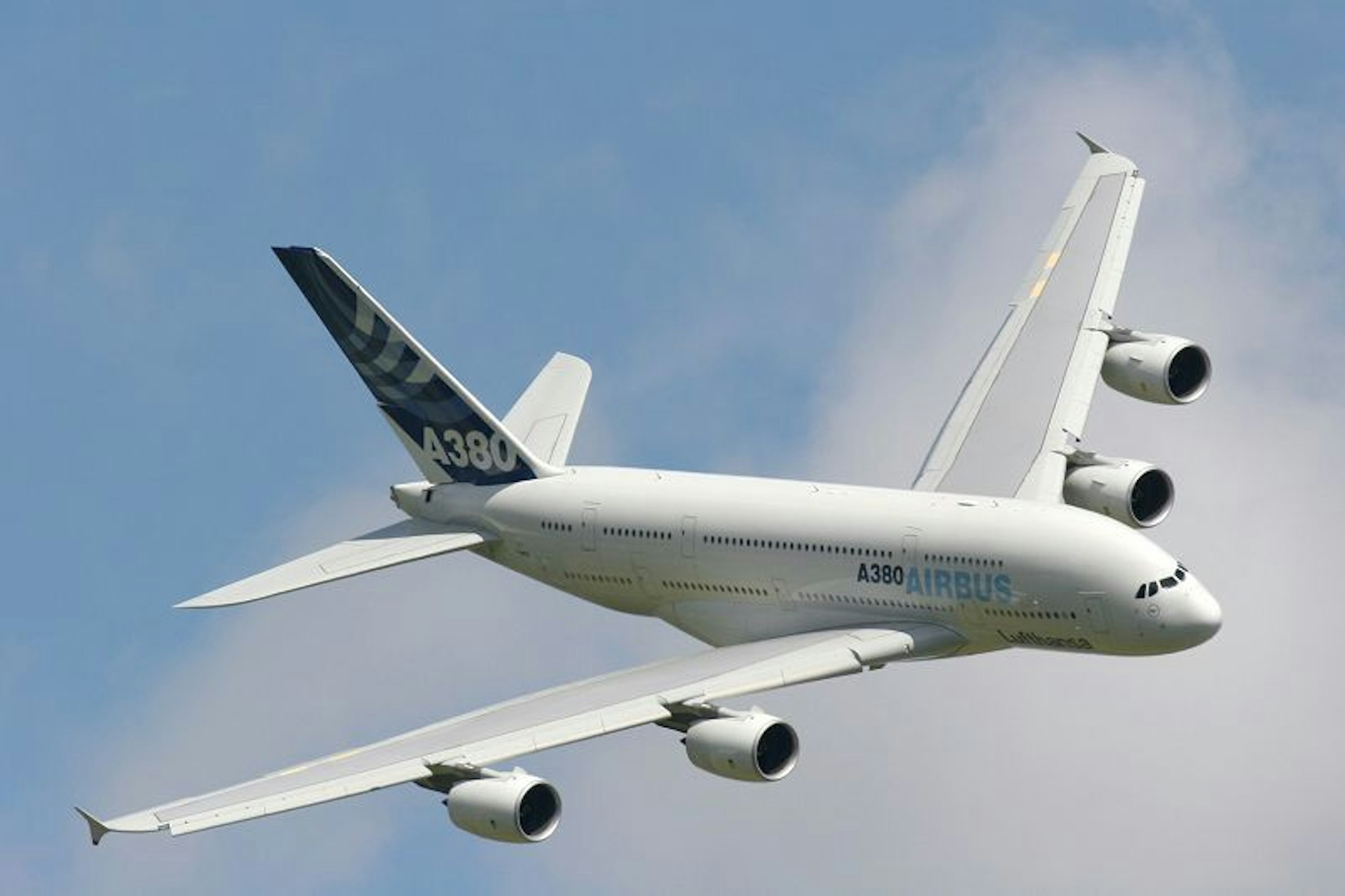
ILA 2006 ended with an impressive visitor record. More than 251,000 visitors were registered from May 16 to 21, including 115,000 trade visitors. 1,014 exhibitors from 42 countries showed products, systems and processes from all areas of the aerospace industry for the first time over six exhibition days. The centre of attention was the Airbus A380, the largest passenger aircraft ever built, presented daily on the ground and in the air.


India in the spotlight
Around 120,000 trade visitors informed themselves about the offerings on Germany's largest temporary trade show site, covering 250,000 square metres, as well as at more than 100 accompanying conferences on current trends. With a record participation of 1,127 exhibitors from 37 countries, products, systems and processes from all areas of the aerospace industry were shown for six days. ILA 2008 was opened by Chancellor Dr Angela Merkel. 331 aircraft of all sizes and categories were presented on the ground and in the air, including numerous premieres. Partner country India used its largest-ever appearance at an aerospace trade show outside its own country to explore business opportunities and showcase its capabilities – for example with an artful flying display by its "Sarang" helicopter team.


The record deal
At ILA 2010, 1,153 exhibitors from 47 countries presented an impressive showcase of products and services from all areas of the aerospace industry. Around 235,000 visitors were registered over the course of the show. Contracts and business agreements with a total volume of at least 16.5 billion dollars (around 14 billion euros) were signed during the trade show. The largest order came from airline Emirates, which ordered 32 Airbus A380 aircraft worth a list total of approximately 11.5 billion dollars. This business agreement was the largest single order in the history of civil aviation to date. Nearly 300 aircraft were presented on the ground and in the air. Among the world, European and ILA premieres unveiled here were the new military transporter A400M, the transport helicopter CH-53GA (German Advanced) fitted with the latest avionics, and the DLR-H2 Antares, the world's first manned aircraft to fly completely CO₂-free thanks to its fuel-cell propulsion.

A new home
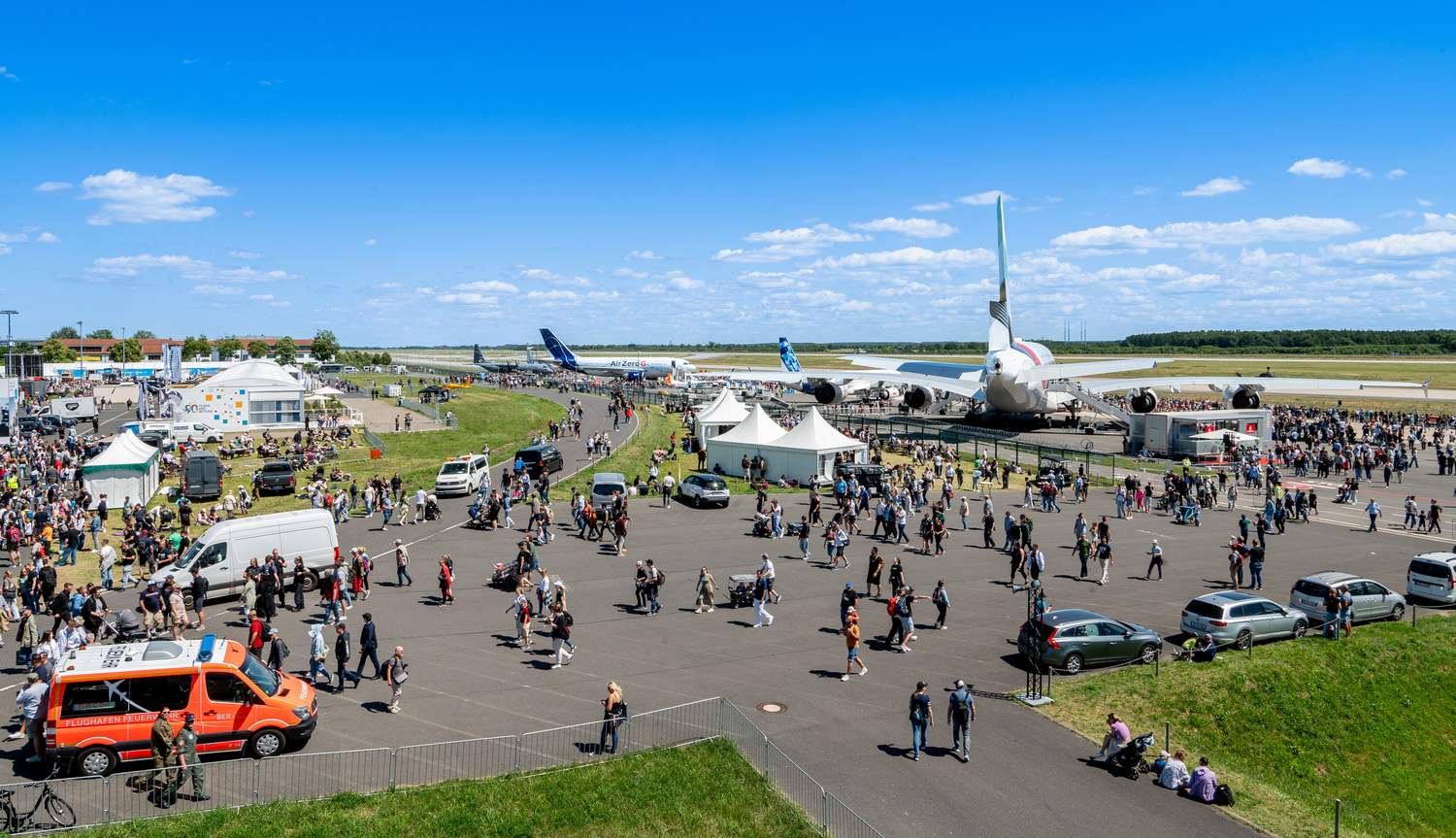
In 2012, the state-of-the-art ILA venue Berlin ExpoCenter Airport – located next to what is today BER Airport – was inaugurated. At the premiere event on the new trade show site, ILA 2012 pulled off a picture-perfect landing: with the largest participation in the more than 100-year history of ILA, 1,243 exhibitors from 46 countries presented an impressive showcase of high-tech products from all areas of the aerospace industry. Chancellor Angela Merkel opened the show. Seen at ILA for the first time: national display teams from Turkey and partner country Poland.

The Space Pavilion
With the second-highest participation in its history, 1,203 exhibitors from 37 countries presented the full breadth of their current high-tech products and research and development projects. A particular highlight was the Space Pavilion, which vividly illustrated to industry experts and the public the benefits of space exploration for humanity. The International Suppliers Center, with more than 1,000 pre-registered customer meetings, proved to be an efficient marketing platform.

3D printing takes off
ILA 2016 took place at Berlin ExpoCenter Airport for the third time: 1,017 exhibitors from 37 countries showed a wide range of their current high-tech products as well as research and development projects. 150,000 trade and private visitors flocked to ILA over four event days. ILA 2016 was opened by Federal Minister of Economics Sigmar Gabriel. Airbus presented T.H.O.R., the first almost entirely 3D-printed aircraft.


Focus on the future
With a targeted focus on future themes and technical developments, ILA 2018 evolved into the leading innovation trade show for the aerospace industry. Around 180,000 trade and private visitors came to the airport from April 25 to 29, 2018, where around 1,100 exhibitors from 41 countries presented a broad range of their current high-tech products and research and development projects. The Federal Government was well represented: Chancellor Angela Merkel was accompanied by Federal Minister of Transport Andreas Scheuer, with visits by Thomas Jarzombek, the Federal Government's new Aerospace Coordinator, and Federal Minister of Economics Peter Altmaier. This year, visitors could admire around 200 aircraft, including the Emirates A380, the modern A350 and A340 BLADE passenger aircraft, the Airbus Beluga super-transporter, Lufthansa's Boeing 747-8 or the largest existing transport aircraft with six engines, the Antonov 225. Military aircraft on display included the Eurofighter, the A400M military transporter, the Tiger combat helicopter as well as the French Rafale, the Kawasaki P1 maritime patrol aircraft from Japan, and the highly advanced US multi-role combat aircraft F35 by Lockheed Martin. The heavy transport helicopters CH-53K (Lockheed Martin) and CH-47 Chinook (Boeing) were also in particular focus.
Cancelled due to the coronavirus pandemic
ILA 2020 had to be cancelled due to the coronavirus pandemic.

Comeback after the pandemic
In 2022, the European Commission was strategic partner of ILA, with the goal of strengthening Europe's technological leadership and paving the way for a sustainable future of aerospace under the motto "Airborne in Europe". Around 72,500 visitors and 550 exhibitors from 80 countries took part, with more than 800 journalists on site. The ILA STAGES programme offered 360 speakers in expert talks, panel discussions and science slams on future trends.
Record comeback
Five ILA STAGES, 350 speakers. 1,500 Talent Hub participants, 210 job offers. 40 Talent Hub partners. European Commission once again strategic partner.
New standards
ILA Berlin 2026 set new standards with increased attendance and record international participation. The programme featured 300 sessions, around 100 aircraft and 3,500 participants at the ILA Talent Hub.